
Last updated on September 18, 2025
Understanding Your Adversary: What is Crabgrass?
A lush, green lawn is the cornerstone of a beautiful landscape, but a single intruder can disrupt the entire vision: crabgrass. This tenacious annual weed spreads with frustrating speed, turning uniform turf into a patchy, unsightly mess. Its ability to thrive in the summer heat, when desirable grasses are often stressed, makes it a formidable foe for homeowners everywhere. The battle against crabgrass is a significant one, part of a global weed control market expected to reach an estimated $40.7 billion by 2030. Winning this battle isn’t about a single application of herbicide; it's about understanding the enemy and implementing a year-round strategy to create a lawn that is inhospitable to this invader for good.
Understanding Your Adversary: What is Crabgrass?
Before you can effectively fight crabgrass, you must understand its nature, lifecycle, and the conditions that allow it to flourish. This knowledge is the foundation of any successful eradication plan.
Identifying Crabgrass: Key Visual Cues
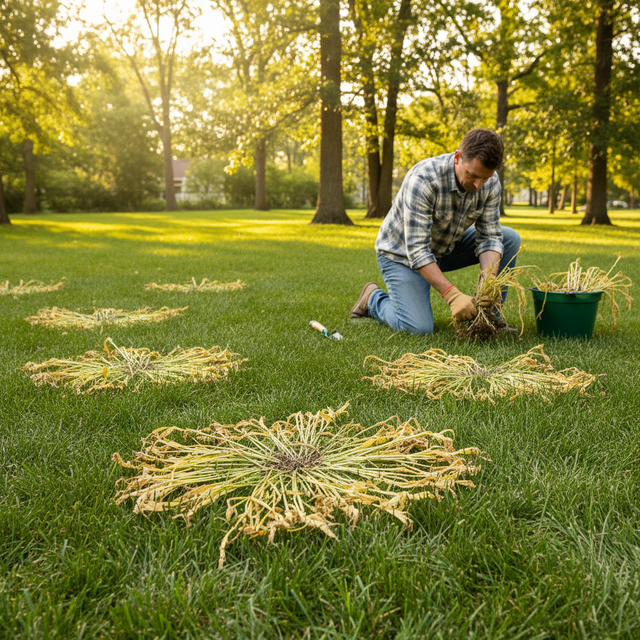
Crabgrass (Digitaria spp.) is often mistaken for other grassy weeds. Early in its life, it might blend in with your lawn, but it quickly becomes noticeable. Look for light green, coarse-textured grass blades that are much wider than those of typical lawn grasses like Kentucky bluegrass or fescue. As it matures, the plant grows outward from a central point in a low, sprawling manner, resembling the legs of a crab, hence its name. The stems are prostrate, rooting at the nodes wherever they touch the soil, which helps the plant spread rapidly and form dense mats.
The Crabgrass Lifecycle: A Notorious Summer Annual's Strategy

The crabgrass lifecycle: A year-long process from germination to seed production and dormancy.
Crabgrass is a summer annual weed, meaning its entire lifecycle completes within a single year. The plants you see in your lawn during the summer will die with the first hard frost of fall. However, the real problem lies in the seeds. A single crabgrass plant is a prolific seed factory, capable of producing up to 150,000 crabgrass seeds in a season. These seeds fall to the soil and lie dormant through the winter, waiting for the right conditions to start the cycle anew. Research has shown that these seeds can remain viable in the soil for up to three years, creating a long-term problem that requires a persistent strategy.
Why Your Lawn is Vulnerable: Understanding the Crabgrass Invasion
Crabgrass isn't a super-weed that can overpower a healthy lawn; it's an opportunist. It thrives where your desirable grass is weak, thin, or stressed. Bare spots from winter damage, areas of compacted soil, or turf that is mowed too short provide the perfect opening. These conditions allow sunlight to reach the soil surface, warming it and triggering crabgrass seed germination. Once established, it aggressively competes with your turf for water, nutrients, and sunlight, further weakening the lawn and creating more space for its own expansion.
Building an Unwelcoming Environment: Advanced Cultural Practices for Prevention
The most effective long-term strategy for crabgrass control is not about killing the weed but about fostering a healthy lawn that naturally chokes it out. A thick, vigorous turf is the best defense.
The Power of Proper Mowing: Taller Grass for a Dense, Healthy Lawn
Mowing your lawn too short is one of the most common invitations for a crabgrass invasion. Shorter grass allows more sunlight to penetrate the canopy and warm the soil, creating ideal germination conditions for crabgrass seeds. Mowing at a higher setting (typically 3 to 4 inches for most cool-season grasses) encourages your turf to grow deeper roots and create a dense canopy that shades the soil. This natural shade keeps soil temperatures cooler and blocks the light necessary for weed seeds to sprout.
Strategic Watering: Deep and Infrequent for a Resilient Lawn
Crabgrass has a shallow root system and thrives in frequently watered, shallowly moist soil. In contrast, desirable turf grasses benefit from deep, infrequent watering. This practice encourages the grass to develop a deep, robust root system that can better withstand drought and heat stress. Water your lawn for longer periods but less often, typically 1 to 1.5 inches of water per week, delivered in one or two sessions. This keeps the top layer of soil drier, creating a less favorable environment for crabgrass germination.
Smart Fertilization for Long-Term Lawn Health
A properly fed lawn is a strong lawn. A strategic fertilizer program provides your grass with the nutrients it needs to grow thick and healthy, leaving no room for weeds. Apply a slow-release fertilizer tailored to your grass type in the spring to promote vigorous growth before crabgrass germination begins. A fall application is also crucial, as it helps the lawn recover from summer stress and build energy reserves for the following spring, giving it a head start against weeds.
Optimizing Your Soil: The Foundation of a Weed-Free Lawn
Healthy grass starts with healthy soil. Compacted soil restricts root growth, water infiltration, and nutrient uptake, weakening your turf and creating an ideal environment for crabgrass. Core aeration, performed annually in the fall or spring, alleviates compaction by pulling small plugs of soil from the lawn. This process allows air, water, and fertilizer to reach the root zone more effectively, promoting stronger grass growth.
Strategic Overseeding: Thickening Your Turf to Fight Crabgrass Pressure
Bare and thin patches in your lawn are open invitations for crabgrass. Overseeding, especially when combined with core aeration in the fall, is a powerful tool for thickening your turf. By introducing new grass seed, you increase the density of your lawn, ensuring that there are no gaps for weeds to exploit. A dense, thriving lawn is a formidable physical barrier against crabgrass seeds.
The First Line of Defense: Pre-Emergent Herbicide Strategies
While cultural practices build long-term resilience, pre-emergent herbicides provide an essential, proactive shield against crabgrass germination.
How Pre-Emergent Herbicides Work: Creating a Soil Barrier
A pre-emergent herbicide does not kill existing plants or prevent seeds from sprouting. Instead, it forms an invisible chemical barrier in the top inch of the soil. When crabgrass seeds germinate and the initial shoot or root comes into contact with this barrier, the herbicide inhibits cell division, and the seedling dies before it can break through the surface. It is a preventative measure, not a cure for an existing problem.
Timing is Everything: Pinpointing Peak Crabgrass Germination
The success of a pre-emergent herbicide application hinges almost entirely on timing. The product must be applied before crabgrass seeds begin to germinate. Germination is triggered by soil temperatures, not air temperatures. The critical window opens when soil temperatures consistently reach 55°F at a depth of 2-3 inches for several consecutive days. Apply the herbicide too early, and it may degrade before peak germination; apply it too late, and you’ve missed your chance. Use a soil thermometer or follow local extension service recommendations for your region.
Choosing and Applying the Right Pre-Emergent Product
Several active ingredients are effective, including prodiamine and dithiopyr. Read the product label carefully to ensure it is safe for your specific grass type. Apply the granular product using a broadcast spreader for even coverage, following the application rate specified on the label. After application, most pre-emergent herbicides need to be watered in with about a half-inch of rain or irrigation to activate the chemical barrier in the soil.
Battling Breakthroughs: Post-Emergent Treatment for Existing Crabgrass
Even with the best preventative plan, some crabgrass may break through. When this happens, you need a reactive strategy using post-emergent herbicides.
When to Act: Identifying and Treating Crabgrass After It Appears
Post-emergent herbicides are most effective when crabgrass plants are young and actively growing. Treating small, immature plants requires less product and yields better results. Once crabgrass becomes large and well-established, or after it has produced seed heads, control becomes much more difficult. Act as soon as you spot new growth.
Selecting Effective Post-Emergent Herbicides
Choose a selective post-emergent herbicide that is specifically labeled for killing crabgrass without harming your lawn. Active ingredients like quinclorac or mesotrione are common and effective. Always check the product label to confirm it is safe for your grass species. Using a non-selective herbicide like glyphosate will kill the crabgrass, but it will also kill every other plant it touches, leaving you with large bare spots.
Application Best Practices for Post-Emergent Herbicides
For small, scattered patches, spot-treating with a liquid spray is the most efficient method. This minimizes the amount of herbicide used and reduces stress on the surrounding turf. Avoid applying these products when temperatures are high (typically above 85-90°F), as this can increase the risk of damaging your desirable grass. Adhering strictly to the instructions on the product label is critical for safety and effectiveness.
Manual Removal: Hand-Pulling for Immediate Control
For a few isolated plants, hand-pulling is a viable and immediate solution. It is most effective when the soil is moist after a rain or watering, which makes it easier to pull the entire root system. For a typical ¼-acre yard, manual weeding can take one to three hours, depending on the infestation. Use a weeding tool to loosen the soil around the base and pull firmly to ensure you get the entire plant.
Natural and Organic Solutions for Crabgrass Control
For those seeking alternatives to synthetic chemicals, several organic options can be integrated into a comprehensive lawn care plan.
Corn Gluten Meal: An Organic Pre-Emergence Product
Corn gluten meal is a natural by-product of the corn milling process that has pre-emergent properties. When applied to the lawn, it releases proteins that inhibit root formation in germinating seeds. Like synthetic pre-emergents, timing is critical. It must be applied before crabgrass germination begins. While often less consistently effective than chemical alternatives, it also provides a source of nitrogen, acting as a mild fertilizer for the lawn.
Other Organic Approaches and Their Role in a Hybrid Strategy
Other organic methods focus heavily on improving soil and lawn health to outcompete weeds. This includes topdressing with compost to improve soil structure and microbial life, using organic fertilizers to feed the turf, and maintaining a sharp focus on the cultural practices of mowing high and watering deep. These organic strategies are foundational and can be combined with targeted chemical applications for a more integrated, sustainable approach.
Common Lawn Care Mistakes That Fuel Crabgrass Invasion
Often, our own lawn care habits are what give crabgrass the upper hand. Avoiding these common errors is a critical step toward a weed-free lawn.
Mowing Too Low: Undermining Your Lawn's Defense Against Crabgrass
Scalping the lawn is a primary cause of crabgrass proliferation. It exposes the soil to sunlight, stresses the turf, and prevents the grass from forming the dense, shady canopy needed to suppress weed germination.
Improper Watering Habits: Creating a Crabgrass Paradise
Frequent, light watering creates the shallowly moist soil conditions that crabgrass loves while discouraging deep root growth in your desirable grass. This weak root system makes your turf more susceptible to drought, heat, and weed competition.
Misguided Fertilization: Feeding Weeds, Not Your Desirable Grass
Applying too much nitrogen fertilizer in the heat of summer can overstimulate cool-season grasses, making them more vulnerable to disease and stress. This weakened state gives heat-loving crabgrass a significant competitive advantage.
Ignoring Soil Health: The Root of Many Lawn Problems and Crabgrass Pressure
Neglecting to address soil compaction, poor drainage, or nutrient imbalances creates a fundamentally weak foundation for your lawn. Crabgrass readily exploits these poor soil conditions where turfgrass struggles to survive.
Neglecting Product Labels: The Dangers of Improper Herbicide Use
The product label is law. Failing to read and follow the instructions on any herbicide can lead to ineffective results, damage to your lawn, or harm to the environment. The label provides crucial information on application rates, timing, and safety precautions.
Understanding Fertilizer Laws and Their Impact
Many regions have regulations regarding fertilizer application, particularly concerning phosphorus content and application timing near waterways. Be aware of your local laws to ensure your lawn care practices are both effective and environmentally responsible.
Conclusion
Eradicating crabgrass is not a one-time event but a continuous process of building a resilient lawn ecosystem. The ultimate solution lies in a multi-faceted strategy that prioritizes prevention over reaction. By focusing on creating a dense, healthy lawn through proper mowing, strategic watering, and smart fertilization, you build a natural defense that crabgrass cannot easily penetrate. Supplement this strong cultural foundation with a precisely timed pre-emergent herbicide application to create an impenetrable barrier against germinating seeds. For the inevitable few that break through, swift action with post-emergent herbicides or manual pulling prevents them from establishing a foothold. By avoiding common lawn care mistakes and committing to a consistent, year-round plan, you can transform your lawn from a battleground into a fortress, ensuring that crabgrass becomes a problem of the past.
Conclusion
Eradicating crabgrass is not a one-time event but a continuous process of building a resilient lawn ecosystem. The ultimate solution lies in a multi-faceted strategy that prioritizes prevention over reaction. By focusing on creating a dense, healthy lawn through proper mowing, strategic watering, and smart fertilization, you build a natural defense that crabgrass cannot easily penetrate. Supplement this strong cultural foundation with a precisely timed pre-emergent herbicide application to create an impenetrable barrier against germinating seeds. For the inevitable few that break through, swift action with post-emergent herbicides or manual pulling prevents them from establishing a foothold. By avoiding common lawn care mistakes and committing to a consistent, year-round plan, you can transform your lawn from a battleground into a fortress, ensuring that crabgrass becomes a problem of the past.
🌱 Need Help Winning the Battle Against Crabgrass?
While DIY strategies can work, sometimes crabgrass requires a professional touch. Simply Lawn makes it easy to find and hire trusted local lawn care companies that know how to tackle stubborn weeds and build a lawn that lasts.