

Introduction: Reclaim Your Lawn with the Right Power Rake
A pristine, healthy lawn or a perfectly graded gravel driveway doesn't happen by accident. It's the result of proper preparation, and often, that means tackling the tough, compacted ground layer that manual tools can't handle. For landscapers, contractors, and serious property owners, the power rake is the indispensable tool that transforms labor-intensive projects into efficient, professional-grade accomplishments. It’s more than just a dethatcher; it's a versatile land-shaping machine.
What is a Power Rake? Beyond the Basic Dethatcher
A power rake, at its core, is a piece of landscaping equipment designed to cultivate and condition the ground's surface. Unlike a simple lawn mower or a light-duty dethatcher, it uses a rotating drum fitted with aggressive teeth, often made with carbide tips, to dig into, lift, and pulverize compacted soil, heavy thatch, and other debris. This action is crucial for a variety of tasks, from revitalizing a suffocating lawn to preparing a perfect seedbed for new growth.
Why This Guide is Essential for Your Lawn Health
Choosing the right power rake is a significant investment in your property's health and your own efficiency. With various types, sizes, and features available, from walk-behind models to heavy-duty skid steer attachments, making an informed decision can be daunting. This guide will demystify the options, break down the critical features, and provide a clear framework to help you select the perfect power rake model for your specific needs, ensuring you get the most value and the best results for your lawn and landscape projects.
Why Your Lawn Needs a Power Rake: Understanding Thatch & Beyond
Before investing in a power rake, it's essential to understand the problems it solves. The primary target is thatch, but its benefits extend far beyond simple removal, touching on soil health, seed germination, and overall surface quality.
The Silent Killer: What is Thatch and Why is it a Problem?
Thatch is a dense, matted layer of dead and living organic material, like grass stems, roots, and stolons, that accumulates between the green blades of grass and the soil surface. A thin layer (less than half an inch) is normal and can be beneficial, but when it becomes too thick, it acts like a barrier. This barrier prevents essential water, air, and nutrients from reaching the soil and the grassroots, effectively suffocating your lawn. It also creates a hospitable environment for pests and diseases, leading to a weak, discolored, and unhealthy turf.
Beyond Thatch Removal: The Comprehensive Benefits of Power Raking
A power rake is the ultimate tool for severe thatch problems, but its capabilities are much broader. Its powerful, digging action offers several key advantages:
- Seedbed Preparation: It breaks up compacted topsoil, creating a loose, pulverized, and ideal environment for seed-to-soil contact, which is critical for successful germination.
- Leveling and Grading: It can smooth out uneven patches in a lawn or grade dirt and gravel surfaces, creating a clean, uniform finish.
- Debris Removal: It efficiently removes embedded rocks, dead grass, and other surface debris, windrowing it for easy collection.
- Improving Soil Health: By breaking up surface compaction, it enhances aeration and water infiltration, promoting deeper and stronger root growth.
When to Power Rake: Reading Your Lawn's Health Indicators
The best time to power rake is during the active growing seasons of your grass type, early spring or early fall for cool-season grasses (like fescue and bluegrass) and late spring for warm-season grasses (like Bermuda and Zoysia). This timing allows the lawn to recover quickly. Look for these signs: a thatch layer thicker than three-quarters of an inch, a spongy feel when you walk on the grass, and poor water absorption.
Power Rake vs. Dethatcher vs. Scarifier: Making the Right Distinction
The terms "dethatcher," "power rake," and "scarifier" are often used interchangeably, but they represent three distinct levels of turf aggression. Understanding the difference is key to choosing the right tool and avoiding damage to your lawn.
Dethatchers: The Gentle Approach for Light Thatch
A lawn dethatcher, often available as an electric dethatcher or a pull-behind attachment for a lawn mower, is the least aggressive of the three. It uses spring tines or flexible flails that comb through the grass to lift and remove light layers of thatch (typically up to a half-inch thick). It’s a maintenance tool for healthy lawns with minor thatch buildup, not a renovation tool.
Power Rakes: The Workhorse for Stubborn Thatch and Preparation
Power raking is a more intensive process for deeper thatch removal (over half an inch). The machine's rigid, rotating teeth make contact with the soil surface, aggressively tearing out the thick, matted layer. This makes the power rake the ideal tool for lawns that are being choked by thatch and for comprehensive seedbed preparation, where breaking up the top layer of soil is necessary.
Scarifiers: Aggressive Renovation for Soil Health
A scarifier is the most aggressive tool, designed for deep soil renovation. Its blades or fixed teeth are engineered for digging into the soil, not just skimming the surface. A scarifier cuts vertical grooves (a process called verticutting) into the soil to sever stolons and rhizomes, which can promote new growth. This deep digging action is excellent for relieving severe soil compaction but is a highly stressful process for the lawn, reserved for major renovation projects.
Types of Power Rakes: Matching the Tool to Your Task
Power rakes come in two primary forms: self-propelled walk-behind units and attachments for larger machinery. The right choice depends entirely on the scale of your projects and the equipment you already own.
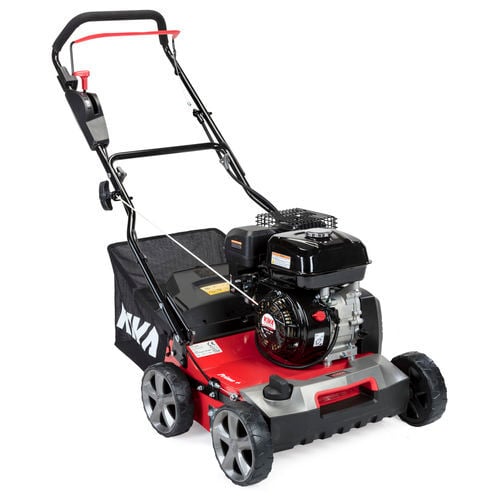
Residential Walk-Behind Power Rakes
Walk-behind power rakes are all-in-one machines, perfect for professional landscapers working on residential properties or homeowners with large lawns. They are maneuverable and can access tighter spaces where larger equipment can't go. While powerful, their working width is generally narrower than attachments, making them less efficient for expansive areas like athletic fields or commercial properties.
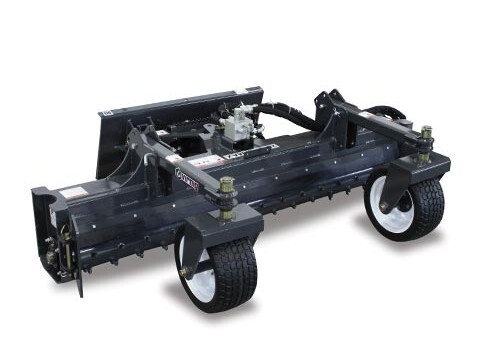
Commercial and Heavy-Duty Power Rake Attachments
For maximum efficiency on large-scale projects, nothing beats a power rake attachment. These are designed to be mounted on the front of a skid steer or a mini skid steer.
- Skid Steer Attachments: These are the largest and most powerful options, offering the widest working width. They are ideal for commercial landscaping, construction site cleanup, and maintaining long gravel roads. They require a skid steer with sufficient hydraulic flow to operate.
- Mini Skid Steer Attachments: Offering a balance of power and accessibility, these attachments are designed for compact utility loaders. They can handle tough jobs in more confined spaces than a full-sized skid steer, making them popular for residential construction and landscaping projects.
Essential Features to Consider When Buying a Power Rake
When comparing different power rake models, the specifications sheet can be overwhelming. Focusing on these key features will help you understand how a machine will perform in the real world.
Power Source and Engine Type: Reliability and Performance
For walk-behind models, the engine is the heart of the machine. Reliable brands like Honda and Briggs & Stratton are common for a reason, they offer consistent performance and good serviceability. For attachments, the power source is the hydraulic motor, which is driven by the carrier machine (skid steer or mini skid steer). Ensure the attachment's required hydraulic flow rate is compatible with your machine's output.
Working Width and Maneuverability: Efficiency vs. Access
The working width, or raking width, determines how much ground you can cover in a single pass. A wider width means faster completion of large, open areas. However, this often comes with increased overall width and weight, which can limit access to tight spots. Consider the typical environment you'll be working in. A 72-inch skid steer attachment is great for a field, but a 36-inch walk-behind model might be necessary for navigating backyard gates.
Drive System: Smooth Operation and Control
The drive system translates power into action. For attachments, a direct drive motor is often preferred for its efficiency and fewer moving parts. Walk-behind units may use a belt drive system. For self-propelled models, features like a hydrostatic transmission provide smooth, variable speed control, while a differential lock can improve traction on uneven or slippery terrain. Power Forward/Reverse functionality is also crucial for maneuverability.
Depth Adjustment: Precision for Turf Protection
The ability to precisely control the depth of the teeth is critical. You want to remove thatch without destroying the healthy grass crowns. This is often controlled by adjusting the drum height. On many attachments, this precision is further enhanced with adjustable END PLATES. These plates not only control the digging depth but also allow you to direct and contain debris, effectively turning the power rake into a box scraper for moving gravel or soil.
How to Choose the Right Power Rake for Your Needs: A Decision Framework
Follow these steps to narrow down your options and make a confident choice.
Step 1: Assess Your Lawn's Size and Terrain
First, evaluate your typical worksite. Are you managing a half-acre residential lawn, or are you preparing ten-acre commercial sites? Small to medium properties with obstacles favor a walk-behind model. Large, open areas demand the efficiency of a skid steer attachment. Hilly or rough terrain will require a machine with a good drive system and sufficient power.
Step 2: Determine Your Thatch Level and Soil Conditions
Is your primary goal light dethatching or aggressive renovation? For thick, compacted thatch and challenging soil conditions, you need the aggressive action of a true power rake. If you are regularly performing seedbed preparation, the soil-cultivating ability of a power rake is non-negotiable.
Step 3: Consider Your Power Source Preference
If you already own a skid steer or mini skid steer, an attachment is the most logical and cost-effective choice. If not, a self-contained walk-behind unit is your best option. Consider fuel (gasoline) vs. the hydraulic requirements of an attachment.
Step 4: Define Your Budget and Desired Value
Power rakes are an investment. Set a realistic budget, but also consider long-term value. A cheaper model might save money upfront but could lack the durability and features needed for professional use. Look for a strong warranty and robust construction as indicators of quality.
Step 5: Prioritize Key Features Based on Your Goals
Based on the steps above, prioritize features. If efficiency is paramount, focus on a wide working width. If you need versatility, look for highly adjustable END PLATES and bi-directional raking. If durability is your concern, prioritize models with carbide teeth and protected drive systems.
Operating & Maintaining Your Power Rake for Optimal Lawn Health
Owning the right tool is only half the battle. Using and maintaining it correctly will ensure optimal results and a long service life.
Pre-Operation Checklist: Setting Up for Success
Before you start, walk the area and remove any large rocks, sprinkler heads, or other obstructions that could damage the machine. Mow the lawn slightly shorter than usual to expose the thatch layer. Finally, check your machine's fluid levels, tire pressure, and ensure all guards are in place.
Best Practices for Effective Power Raking
Start with the teeth set at a high position, just skimming the surface, and make a test pass. Adjust the depth gradually until the teeth are pulling up the desired amount of thatch and lightly scoring the soil. Work in a consistent, slightly overlapping pattern. For heavy thatch, you may need to make a second pass at a 90-degree angle to the first.
Post-Raking Lawn Care: Nurturing Your Lawn Back to Health
After power raking, your lawn will look stressed, but this is temporary. Rake up and remove all the pulled-up debris. This is the perfect time to overseed, as the seed will have excellent contact with the soil. Apply a starter fertilizer and water the area thoroughly to kickstart the recovery and germination process.
Conclusion
A power rake is a transformative tool for anyone serious about landscape management and lawn care. It goes far beyond the capabilities of a simple mower or dethatcher, offering the power to remove choking thatch, prepare perfect seedbeds, and grade surfaces with professional efficiency. By understanding the different types, evaluating the essential features like working width, teeth design, and drive systems, and following a structured decision-making process, you can confidently select the right model. An investment in the correct power rake is an investment in healthier soil, a more vibrant lawn, and countless hours of saved labor.
🍂 Reclaim Your Lawn with a Pro-Grade Touch
A power rake can transform tired, thatch-choked grass into healthy, thriving turf: but results depend on skill and timing. Let verified, insured lawn care pros handle the heavy lifting. They’ll power rake, seed, and restore your lawn to perfection.
[widget=Blog Power Rake]