
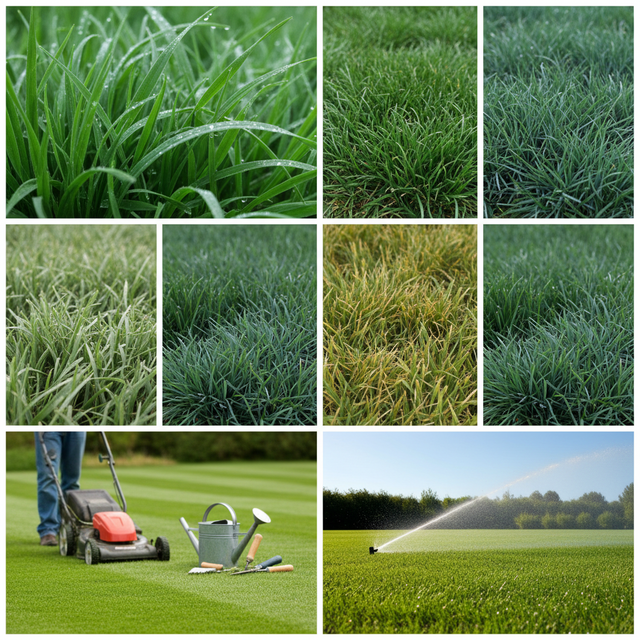
Are you staring at your lawn wondering, "What type of grass do I have?" You're not alone. At Simply Lawn, we understand that knowing your grass type is the foundation of a healthy, vibrant yard. As a leading directory for lawn care companies, we connect homeowners like you with local experts who can help maintain your lawn based on its specific needs. In this comprehensive guide, we'll walk you through how to identify grass type, from basic classifications to advanced techniques. By the end, you'll be equipped to answer "What type of grass do I have?" and take actionable steps toward optimal lawn care. If you're ready to transform your yard, browse our directory of trusted lawn care professionals today!
I. Why Identify Your Grass Type?
Identifying your grass type is more than just a curiosity, it's essential for effective lawn maintenance. When you know "what type of grass do I have," you can tailor your care routine to match its unique requirements, leading to a lush, resilient lawn. Different types of grass thrive in specific climates, soil conditions, and care practices. For instance, using the wrong fertilizer or mowing height on the incorrect grass variety can lead to patchy growth, disease, or even lawn failure.
At Simply Lawn, we've seen countless homeowners struggle with lawn issues simply because they didn't identify grass type early on. By understanding your lawn grass identification, you prevent common pitfalls like overwatering or improper pest control. This knowledge empowers you to make informed decisions, saving time and money. Semantically, terms like "grass identification guide" and "types of lawn grass" often lead people to resources like this, and we're here to provide the authority you need. Whether you're in a cool-season or warm-season zone, pinpointing your grass type ensures year-round beauty. Ready to get started? Let's dive into the classifications.
II. Initial Classification: Warm-Season vs. Cool-Season Grasses
The first step in answering "what type of grass do I have" is determining if it's a warm-season or cool-season variety. This classification is based on how grasses respond to temperature and climate.
A. Understanding Climate Zones and Their Influence
Climate zones play a pivotal role in lawn grass identification. The USDA Plant Hardiness Zone Map divides the U.S. into regions based on average winter temperatures. Cool-season grasses flourish in northern zones (Zones 3-7), where winters are cold and summers mild. Warm-season grasses dominate southern zones (Zones 8-11), thriving in hot, humid conditions. If you're in a transition zone (Zones 7-8), you might have a mix, making "identify grass type" even more crucial.
For example, if your lawn greens up in early spring but browns in summer heat, it's likely cool-season. Conversely, if it peaks in midsummer, it's warm-season. At Simply Lawn, our directory connects you with local pros familiar with your zone's grass types, ensuring expert advice tailored to your area.
B. Identifying Growth Peaks (Spring/Fall vs. Summer)
Observe your lawn's growth patterns to narrow down options. Cool-season grasses like Kentucky bluegrass grow vigorously in spring and fall, entering dormancy during hot summers. Warm-season types, such as Bermudagrass, explode in summer but may brown in winter. Asking "what type of grass do I have" often boils down to these seasonal cues. Track your lawn over a few months, if it's lush in cooler months, it's cool-season; if it loves the heat, it's warm-season.
C. Recognizing Transition Zone Considerations
Transition zones present unique challenges for grass identification. Here, neither pure cool nor warm-season grasses may thrive perfectly, leading to hybrids or mixes. For instance, tall fescue is popular in these areas for its adaptability. If you're unsure, consider soil testing or consulting experts through Simply Lawn's network. Identifying grass type in transition zones can prevent frustration and promote a healthier lawn.
III. Detailed Examination: Key Characteristics for Grass Identification
Once you've classified by season, examine physical traits for precise lawn grass identification. This hands-on approach helps answer "what type of grass do I have" with confidence.
A. Leaf Blade Features
Leaf blades offer telltale signs in any grass identification guide.
1. Blade Width
Measure the width: Fine blades (under 1/8 inch) suggest fescues, while wider ones (over 1/4 inch) point to St. Augustinegrass.
2. Blade Tip Shape (Pointed, Rounded, Boat-shaped)
Tip shapes vary, pointed for ryegrass, boat-shaped for bluegrass, rounded for zoysiagrass. These details refine your search for "types of grass."
3. Leaf Texture (Fine, Coarse, Soft, Stiff)
Feel the texture: Soft and fine for bentgrass, coarse and stiff for bahiagrass. This tactile method enhances accuracy.
4. Color Variations (Light, Medium, Dark Green, Blue-Green)
Colors range from blue-green in bluegrass to light green in centipedegrass. Note shades under sunlight for clues.
5. Venation (Presence of Midrib, Glossiness)
Look for a prominent midrib or glossy sheen, Bermudagrass often has both, aiding identification.
B. Growth Habit
1. Bunch-Type Growth
Bunch grasses like tall fescue form clumps, not spreading aggressively.
2. Spreading Growth (Stolons, Rhizomes)
Spreading types use stolons (above-ground) or rhizomes (below-ground). Bermudagrass spreads via both, creating dense turf.
C. Collar Region Anatomy
The collar, where blade meets stem, is key for experts.
1. Vernation (Folded or Rolled)
Folded vernation (like a book) indicates fescues; rolled (like a tube) suggests bluegrass.
2. Auricles (Presence, Shape, Size)
Auricles are ear-like projections, present in ryegrass, absent in others.
3. Ligules (Type: Membranous, Hairy, Absent)
Ligules vary: Membranous in bluegrass, hairy in zoysia, absent in some fescues.
D. Seed Head Characteristics (if present)
If seed heads appear, note their shape, panicle for bluegrass, spike for Bermudagrass. This seasonal feature confirms "what type of grass do I have."
IV. Common Grass Types and Their Distinguishing Features
Now, let's explore popular types of lawn grass with their unique traits.
A. Cool-Season Grasses
1. Kentucky Bluegrass
Known for boat-shaped tips and rhizomatous spread, it's blue-green and ideal for northern lawns.
2. Fine Fescue (Creeping, Chewings, Hard, Sheep)
Fine-textured, bunch-forming, shade-tolerant, perfect for low-maintenance yards.
3. Tall Fescue
Coarse, deep-rooted, drought-resistant; thrives in transitions.
4. Perennial Ryegrass
Quick-germinating, fine blades with auricles; great for overseeding.
5. Bentgrass
Very fine, low-mowing tolerance; common on golf courses.
B. Warm-Season Grasses
1. Bermudagrass
Aggressive spreader, fine to medium texture; heat-loving.
2. Zoysiagrass
Slow-growing, dense; tolerates foot traffic well.
3. St. Augustinegrass
Broad blades, shade-tolerant; popular in humid south.
4. Centipedegrass
Low-maintenance, light green; acidic soil lover.
5. Bahiagrass
Coarse, drought-resistant; forms seed heads easily.
6. Kikuyu Grass
Fast-spreading, invasive in some areas; warm-climate staple.
For more details, check out this external resource from Purdue University's Turfgrass Science program, a trusted authority on grass types.
V. Advanced Identification and Expert Resources
If basic methods aren't enough, turn to advanced tools.
A. Consulting Local Agricultural Extension Services
Your local cooperative extension office offers free grass identification services. They can analyze samples and provide zone-specific advice.
B. Utilizing Mobile Identification Applications
Apps like PictureThis or iNaturalist use AI for quick scans. Upload a photo to get instant insights on "what type of grass do I have."
At Simply Lawn, we recommend combining these with professional help from our directory of lawn care companies.
VI. Benefits of Knowing Your Grass Type for Optimal Lawn Care
Understanding "what type of grass do I have" unlocks tailored care.
A. Tailoring Mowing Practices
Mow cool-season grasses at 2-3 inches, warm-season at 1-2 inches for health.
B. Optimizing Watering Schedules
Warm-season need less frequent deep watering; cool-season prefer consistent moisture.
Identifying your grass type is half the battle: getting the soil right is the other half. Our portfolio partner Harbor Soils stocks quality topsoil and amendments suited to Pacific Northwest lawns.
C. Selecting Appropriate Fertilizers and Nutrients
Nitrogen-rich for bluegrass, low-nitrogen for centipede, match to type.
D. Effective Pest, Disease, and Weed Management
Target treatments: Fungicides for brown patch in St. Augustine, pre-emergents for crabgrass in Bermudagrass.
Knowing your grass type leads to a thriving lawn. Don't guess, identify today and connect with Simply Lawn's network of experts for personalized service.
FAQ: Common Questions About Identifying Grass Types
How can I tell what type of grass I have without professional help?
Examine leaf blades, growth habits, and seasonal patterns as outlined in our grass identification guide. Use apps or online tools for quick checks.
What are the main differences between cool-season and warm-season grasses?
Cool-season grasses grow best in spring/fall and cooler climates, while warm-season peak in summer and hotter areas. This is key to answering "what type of grass do I have."
Why does my grass turn brown in winter?
It could be a warm-season grass entering dormancy. Identify grass type to confirm and learn overseeding options.
Can I have multiple types of grass in my lawn?
Yes, especially in transition zones. A professional from Simply Lawn's directory can assess and recommend uniformity.
How often should I test my soil for grass identification?
Annually, as soil pH affects grass health. Extensions like those from universities provide testing kits.
What if I still can't identify my grass type?
Contact a local expert through Simply Lawn. Our directory connects you with certified lawn care companies for on-site analysis.
By mastering lawn grass identification, you're one step closer to the perfect yard. Visit Simply Lawn today to find top-rated professionals in your area and say goodbye to guessing "what type of grass do I have"!